Category: Life at Tuscarora Lodge

Why do Moose have Bells?

How to see Moose on the Gunflint Trail

We’ve all been seeing many moose around this spring on the Gunflint Trail, and I like it.

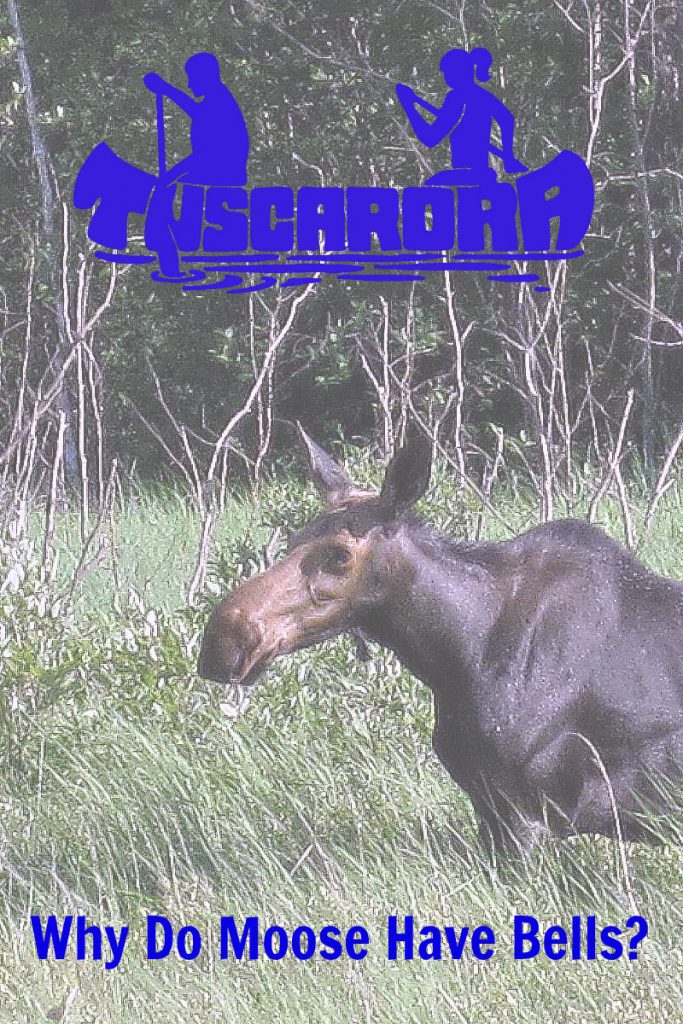
Do you notice the piece of skin and hair—the dewlap— hanging under her chin? I’m calling this one a “her” because she had a calf in the weeds, which was why we quickly left her alone. There’s not a great way for me to otherwise distinguish the hims and hers in this season of the year before antlers emerge. The gender of the one in the video? I do not know.

At any rate, the dewlaps, or bells, or moostaches, are a mystery. Both males and females have them, but male bells tend to be larger. Some of them are fat and 20 inches long, some are just tufts of hair.

The moose experts aren’t in agreement as to the purpose of the dewlap. Some say it helps with heat regulation. The long strands that sometimes hang down can also freeze and break off in the winter. Ouch.

Apparently they reach their biggest magnitudes on the chins of 3-5 year old bull moose.

Many biologists speculate that dewlaps (bells) play a part in the mating rituals, perhaps for dispensing scents (from bull urine and saliva, if that could ever be appealing). Perhaps size and shape are attractiveness indicators.

I’m thinking that the bells have to get caught up in the brush sometimes, and that can’t be comfortable. And that is all I know.

-Written by Sue Ahrendt

Moose on the Gunflint Trail Moose Pond Drive near Saganaga Lake

Spring is a great time to see moose on the Gunflint Trail, because they prefer cool temperatures under 60 degrees Fahrenheit and the lack of snow allows them to move through the forest with ease. In May, watch for cow moose with their newborn calves. Be respectful and observe the new family from a distance.

As you can see in the photo below, you have to look closely for moose. With their mottled brown coats, moose often blend into the background, especially before the trees and scrubs leaf out.

Peekaboo Moose in the Superior National Forest

There’s no secret trick for how to see a moose on Gunflint Trail, other than going out frequently and looking carefully. You’re most likely to see a moose feeding and moose favor swampy areas where they can feast on a couple of their favorite foods: water lilies and willow branches. On great spot to look for moose is the beaver pond on the Round Lake Road on the way to Tuscarora Lodge and Canoe Outfitters. As temperatures heat up in the summer,  moose are more likely to feed in the cooler dusk and dawn.


Moose on the edge of Saganaga Lake on the Gunflint Trail


Planting Trees, Remembering Fire

The families came to plant trees last Saturday for Gunflint Green up. I can’t tell you what a pleasing little tradition it has become these last five years.
Tom and Julia (who add a little more style to Cabin 2 every summer) and I were a trio. My job was to hoe the grass clumps, Tom would dig, Julia would plant. I was truly a happy hoer.

Last year at this time of year, Shelby wrote a poem of her memories of the start of the Ham Lake Fire. We really would have preferred to shelter our kids from the whole forest fire experience. Not something to wish on a 10 and a 12 year old. Even though adversity builds character and resilience, I think this one went a little too far.

However, we’re proud of the young adult she is becoming.

(12 year old Shelby)


Fire

Five minutes to fit my entire world into

This vacant suitcase in front of me

All my memories, necessities, smiles

Crammed in a single duffel


My heart pounds a

Panicked fluttering inside my chest

What what what?

What should I choose to bring?


The photos smiling on the walls

The battered lamp beside my bed

My favorite strawberry T-shirt.

What do I treasure most?


My time is ticking away

Throw in a few pairs of jeans

The money from my top dresser drawer

A third grade year book


What should I save?

Everything? Nothing?

Grab some pictures off the wall

Toss them in the pile


Five minutes and my entire world is packed into

This bulging suitcase in front of me

The tromp of heavy boots echoes upstairs

A firefighter’s gruff voice hollers


I sprint up the steps

Bag slung over my shoulder

Sunlight beams through the haze

As I dash to the idling Jeep


My dad at the wheel

My brother beside me in the back seat

We roar down the dusty driveway

A blanket of smoke curling thick among the pines


Now, I count

One dad, one brother, one panting Labrador…

No Mom

Where is Mom?


We round the corner

And collide with the flames

I open my mouth in a silent scream

Hands clench the door handle


A cocoon of fire envelopes the road

Flaming tree tips plummet and ignite the parched straw

Red and orange flickers burn my wide eyes

With their terrorizing image of destruction


As I glimpse mom’s grey suburban

Motionless at the Cross Bay Lake Entry point

The terrifying truth burbles up

And washes over my forced calm


Straining against my seatbelt

Hysterical panic exploding inside of me

Out there in the blazing inferno

My mom faces a hurricane of flame and heat she can’t fight


Helpless tears streak my cheeks

Strapped in a car; stuck

We approach the second entrance to the Cross Bay Lot

A grey suburban pulls out ahead of us


My heart soars

Stopping the sobs

We screech to a halt at the Gunflint Trail

And slowly turn


The smoky billows climb the air

Purple and orange hues blossom through the gray

Our house, our life

Disappearing into the sky


I discover the panic has stopped

Take a shaky breath

Somehow, some way

We’ll survive this


Waiting, breathing, accepting

Watching the firefighters

Hearing the radio exchanges

Dreading the hour we’ll see the destruction

———————————————-

The mile driveway stretches into millions

As we head back in the anxious car

The true wrath of the fire

Is revealed


Wasteland stretches before me

A desolate scene of smoking silence

Charred black from the raging blaze

Only a splintered shadow of the majestic beauty this forest once was.


The flames have stripped the very soil of its memory

Scraped down the rich dirt to raw rock

Leaving beached granite whales

In the ocean of blackness


The ashes ache with death

A forest that was once filled with life and energy

Now flutters between my fingers

And blankets the ground with a heavy sadness.


Towering white pines

That I had loved to lean against

Because they felt so completely solid and secure

Are left as frail slivers struggling to stand


But my eyes stretch over the hill

There, in a sparkling bubble of green

Lies our house, our resort

An island of survival in the sea of disaster


And my heart flies higher

Than the topmost branches of the soaring white pines

Because there will be new life in this desert

A new emerald woods


It may be my children

Who are the ones leaning against grand old trees

The ones who get to experience their great support

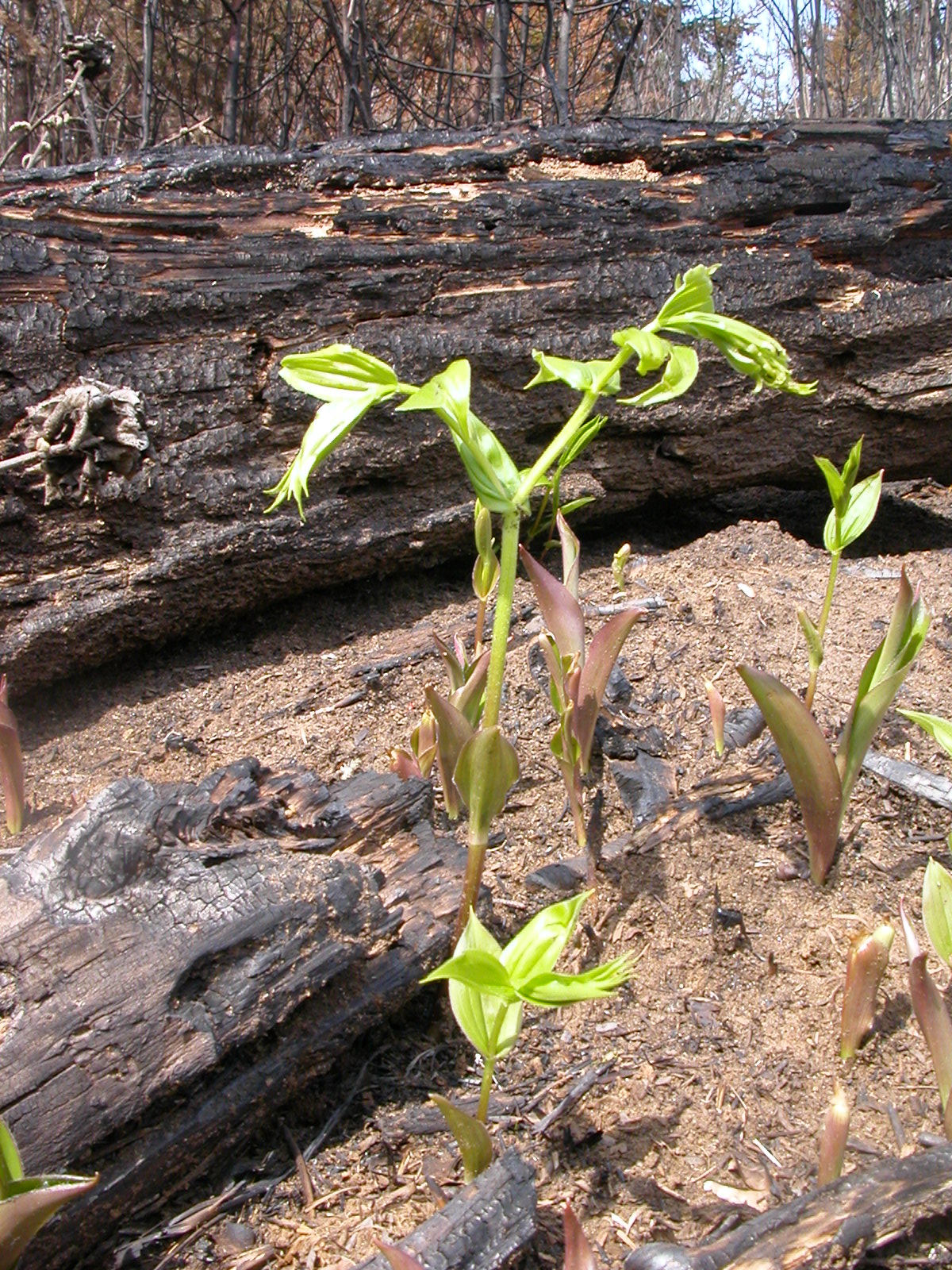
But sprouts are already tunneling up through the ash to sunlight


So I unpack my world, my suitcase

Put back my treasures

And watch this stunning forest

Create and recreate its beauty

(This poem appeared in the Boundary Waters Journal, Spring 2011 issue.)


Saving a Chair

Maybe I was feeling a little nostalgic about Mother’s Day.
Maybe it was because Daniel was working like a fiend on his autobiography project—and I was helping him compile photos from growing up, and reading his version of the memories. I don’t know if it is a sad tribute to the Suzuki method of violin, or to me….but I had forgotten how we used to argue about the proper placement of the margarine box/paint stick that was his first violin. Really Suzuki? I was supposed to sit in on all the lessons and practice with him every day? I was supposed to remember and reinforce the exact placement of his elbow, and he was going to remember that forever.? Sigh.

At any rate, on Monday when it came time to throw this particular chair in the dumpster, I just couldn’t do it. It was a great chair before the glide pedestal broke off. The glider footstool that provided the true comfort broke years ago–not sure, but I’m guessing it was from multiple kids ‘surfing’ on that thing.
My parents bought us this glider–where they wisely guessed we might spend hours with babies. I’m most nostalgic about those middle of the night feedings, where I was alone in the world with each baby, in turn. The little cottage we lived in had these weird orange sconces. I fell in love with those little bald heads in this chair. In that quiet orange glow, I learned what Sylvia Boorstein meant–when she talked about mortgaging my heart for life.

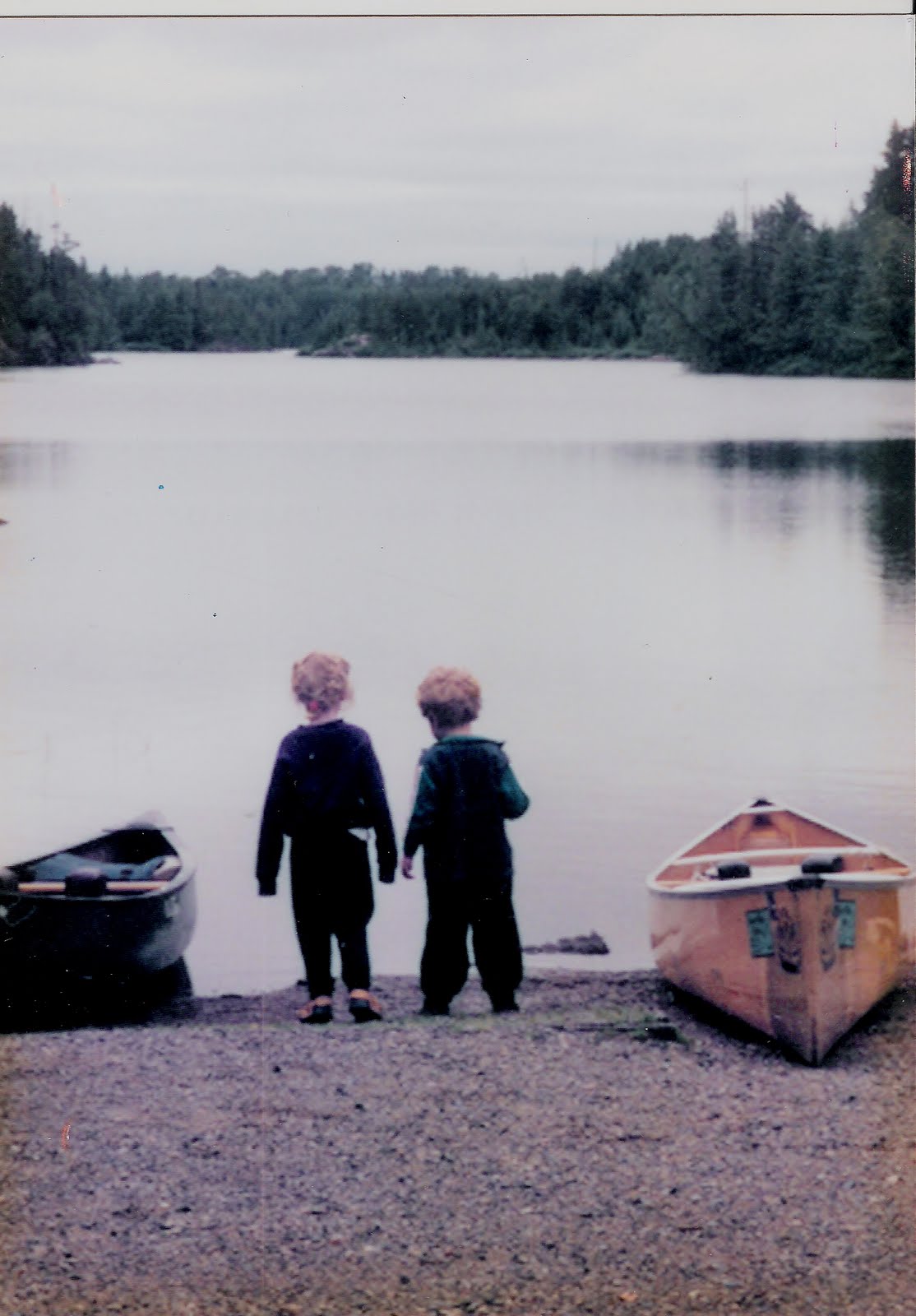
In Daniel’s photo hunt, we came across a photo that didn’t mean so much to him, not such a good photo. It was our first family canoe trip, Shelby was the 4 year old expert on ‘Boundary Waters’ from her trips as a toddler, so she gave Daniel the lowdown for the entire car ride. When we arrived at the Seagull landing–Andy and I went into the bustling mode of unloading canoe and gear. It was July, 1999. We were in a hurry to secure a campsite, having no idea that we’d have the lake strangely to ourselves, because of a recent wind storm. We hadn’t been paying so much attention to the news I guess. We looked up, and the kids had climbed out of the car and were standing motionless at the edge of the water, just looking at ‘Boundary Waters’. I loved that moment.

Stop by my office. You are welcome to take a moment to sit in my chair and look at Boundary Waters.

Paddling Season


The ice went out last Thursday–we woke up to a beautiful morning today, that’s for sure.

In a couple of hours we’ll plant some trees by the Round Lake landing–part of the Gunflint Green Up shindig.

Staff members started to arrive last week, paddling guests start coming on Monday. Here we go!

Now That’s More Like It.

Yesterday was a day worth waiting for.

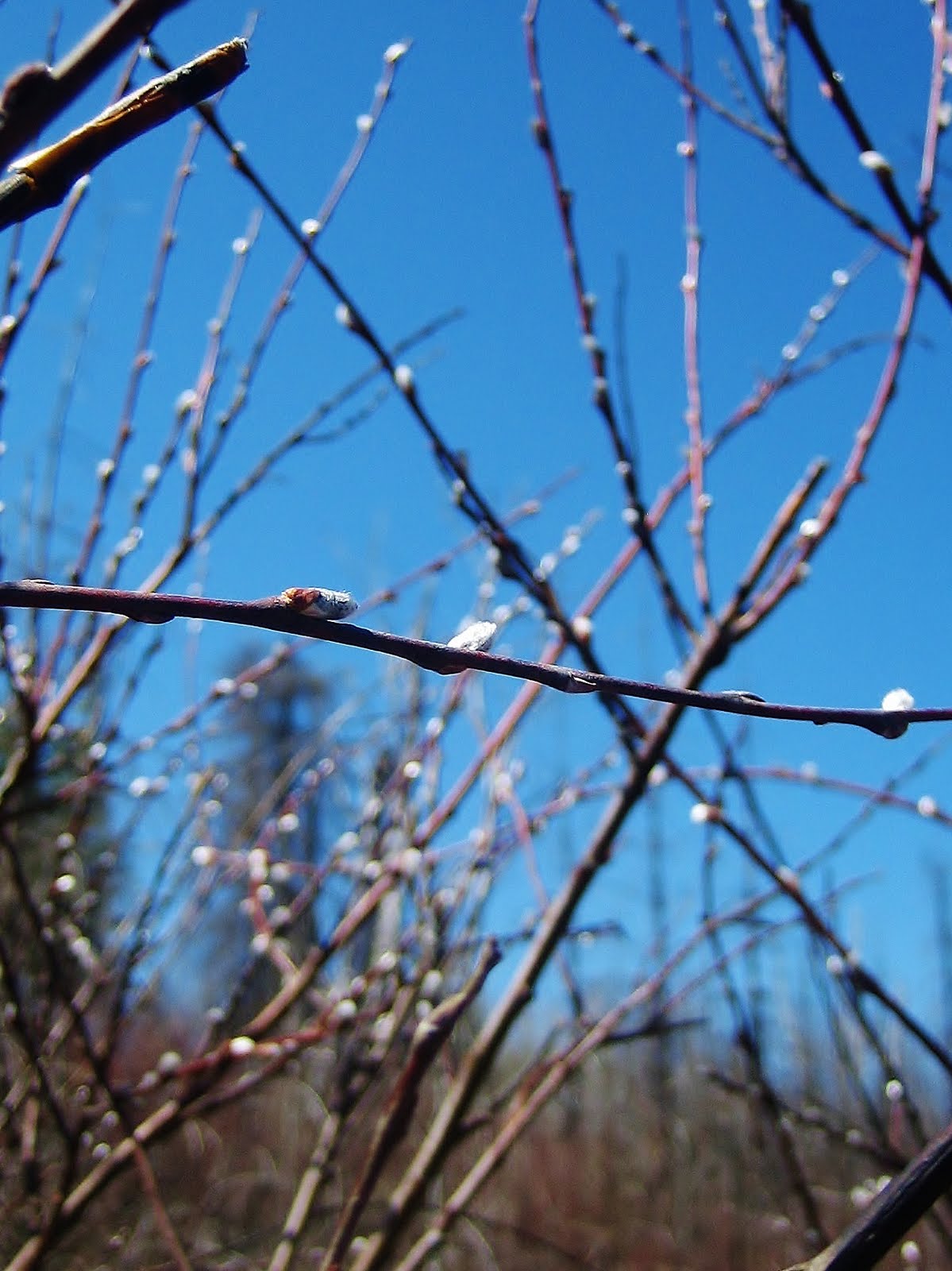
The pussy willows were liking that sun as much as I was…I think they might be a little behind this year.

I was reading about the way lake ice melts. Apparently, when the snow melts from the surface, the ice acts like the glass in a greenhouse, encouraging the sun to warm the water, and melt the ice from below. Who knew? When the depth of the ice is a foot or less, the ice is transformed into crystal “candles” that conduct light even better, which also makes the ice look black. After that, the ice doesn’t stand a chance. When a wind comes up, we hear the friendly tinkling sound of many candles breaking apart. Shelby and I were talking about it the other day…and she said “Isn’t it cool, that the ice evolved to go out like that.” Then she immediately corrected her thinking….it DOES seem like an evolution-type thing, but….why would ice evolve to disappear right on time? For the survival of the planet? For the survival of the outfitters? At any rate, it’s disappearing by the hour. It must have rained last night, because it is full of puddles right now, and much blacker than yesterday

Some people will recognize the wine water of the Cross River. It’s not pollution–it’s tannic acid, from the nutrients in the water. Not sure why some lakes are so clear and blue, and others are tea-colored, but it doesn’t affect the quality of the water. Just talking about it makes me want to take in small water bottles to our familiar lakes and do a blind taste test. I know some lakes have water worth camping early for—-and others are not quite as sweet, but I wonder if we could actually identify the specific lakes by the taste of the water? The sun yesterday made for a sparkling water sight, that’s for sure.

I can’t help taking photos from the overlook on the Centennial Trail. Denali and I make it a destination on busier days. We think of it as our plot. Our little retreat to a lonely place. It’s familiar and oh-so-peaceful.

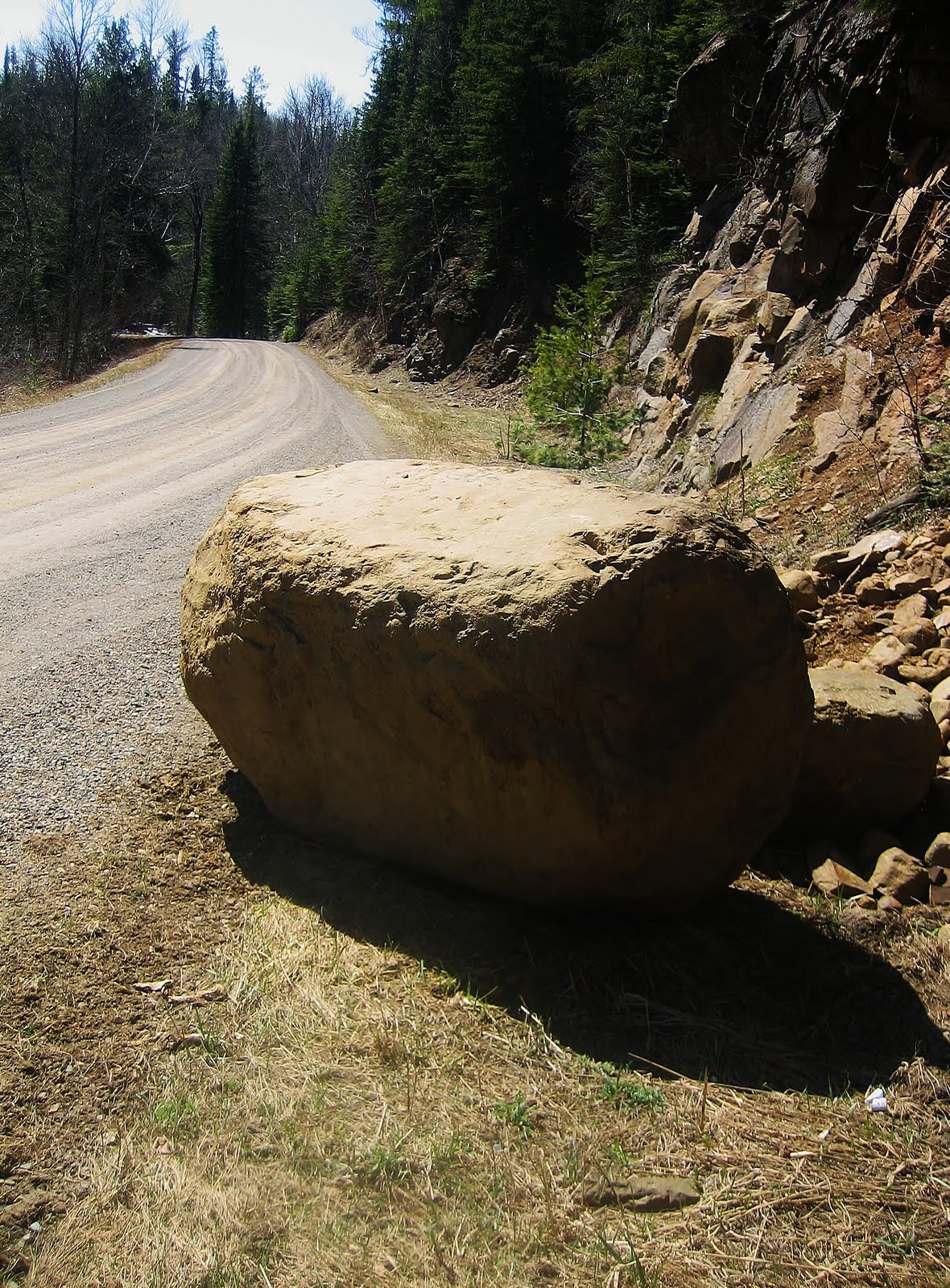
This boulder fell next to the road this spring. Andy called the Highway Department to report it, not a problem for us, but I’m sure it might be a problem for the plow. Andy told his friend Gary not to worry, no hurry, we moved it to the side. Just a little road humor for Gary when he arrives..an inside excavation joke….we’re lucky that it decided to fall where it did.

It always tugs at my heart to see a baby tucked up under the protection of its mother–no matter what the species.
Welcome spring!